Introduction to Bioequivalence Studies
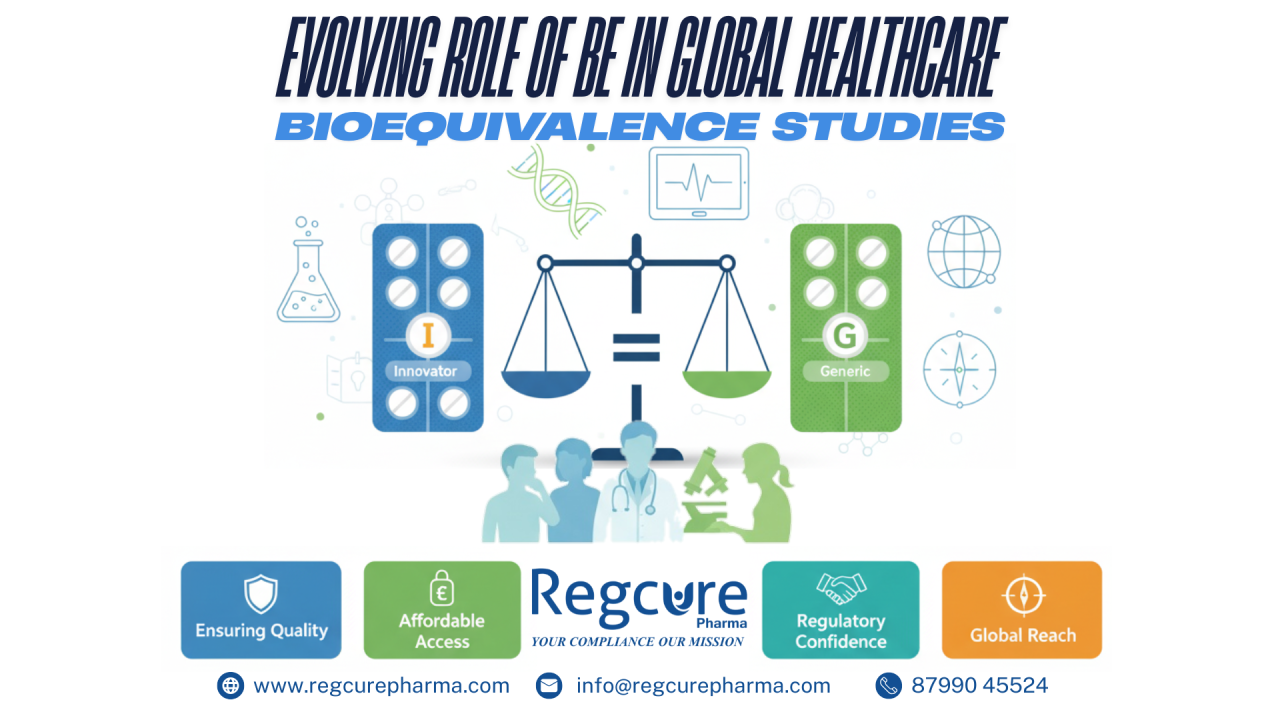
In today’s healthcare landscape, bioequivalence (BE) studies have emerged as a cornerstone in ensuring access to safe, effective, and affordable generic medicines. These studies scientifically establish that a generic drug delivers the same therapeutic effect as its innovator counterpart, enabling therapeutic interchangeability and protecting patient safety. With rising healthcare costs and the growing demand for wider access to treatment, BE assessments are now a critical requirement in the regulatory approval process worldwide.
Global Regulatory Harmonization
Over the past decade, the landscape of bioequivalence research has advanced significantly. Leading regulatory bodies such as the U.S. Food and Drug Administration (FDA), European Medicines Agency (EMA), and the World Health Organization (WHO) are working toward harmonized BE guidelines. This alignment streamlines multi-country submissions, reduces duplication, and accelerates global market access for generic medicines.
Technological Advancements Driving Precision
Breakthroughs in analytical techniques, particularly high-sensitivity LC-MS/MS methods, have transformed pharmacokinetic evaluations. These advanced tools allow detection of drug concentrations at extremely low levels, ensuring accurate, reproducible, and reliable bioequivalence outcomes.
Expanding Study Populations
Traditionally, BE trials have been conducted in healthy adult volunteers. However, recent trends highlight the importance of including pediatric, geriatric, and comorbid patient groups to better reflect real-world drug usage. This shift ensures broader applicability of study results and enhances the relevance of generic approvals.
Biowaivers for Cost-Effective Development
The Biopharmaceutics Classification System (BCS) has enabled biowaiver pathways for certain low-risk drugs. By reducing the need for extensive in-vivo studies, these approaches lower development costs, minimize ethical concerns, and expedite the approval of generics without compromising safety or efficacy.
Emerging Trends Shaping BE Studies
- Pharmacogenomics: Understanding genetic variability is refining how drugs are metabolized across diverse populations.
- Novel Drug Delivery Systems: Nanoparticles, liposomes, and controlled-release formulations demand advanced evaluation methods.
- Decentralized Clinical Trials: Accelerated by the COVID-19 pandemic, remote models now incorporate digital monitoring and telemedicine.
- Artificial Intelligence & Machine Learning: AI-driven study design optimizes sampling, reduces variability, and enhances patient-centric outcomes.
The Role and Importance of Bioequivalence (BE) Studies in Today’s Pharmaceutical Market
Role of Bioequivalence (BE) Studies in the Market
1. Facilitating Generic Drug Entry
BE studies provide scientific evidence that a generic medicine is therapeutically equivalent to its branded counterpart. This accelerates generic approvals, increases competition, and lowers drug prices, making medicines more accessible to patients.
2. Ensuring Patient Confidence
By proving that generics match innovator drugs in quality, safety, and efficacy, BE studies build trust among healthcare professionals and patients. This confidence is essential for widespread acceptance of generic substitution.
3. Regulatory Requirement for Market Access
Most regulatory authorities mandate the submission of BE data for the market authorization of generics. This requirement ensures uniform standards, protects public health, and maintains consistency across regions.
4. Promoting Cost-Effective Healthcare
Generics backed by BE data offer the same therapeutic outcomes at lower costs. This enables governments, insurers, and healthcare providers to reduce expenditure while ensuring effective patient care.
5. Encouraging Innovation in Drug Delivery
Competition driven by BE standards encourages companies to design improved formulations, such as controlled-release or patient-friendly dosage forms, while still demonstrating equivalence to reference products.
6. Supporting Global Market Expansion
Harmonized BE guidelines allow companies to use one set of study data for multi-country submissions. This streamlines registration processes and expands the global availability of affordable medicines.
7. Ensuring Ethical and Safe Market Practices
By establishing a scientific benchmark, BE studies prevent the entry of substandard or unsafe formulations. This safeguards patients and ensures fair competition in the pharmaceutical industry.
Importance of Bioequivalence (BE) Studies in Regulatory Dossiers
BE studies are a central component of drug dossiers, especially in generic applications. They provide clear proof that a generic formulation is therapeutically equivalent to its innovator product, ensuring interchangeability and patient safety.
Regulatory bodies such as the FDA, EMA, CDSCO, and WHO require BE data in the Common Technical Document (CTD) format. This allows generics to be approved without repeating large-scale clinical trials, reducing costs and shortening development timelines. Importantly, BE results enable generics to enter the market promptly after patent expiry, supporting affordable healthcare and wider patient access.
Safety of Bioequivalence (BE) Studies for Volunteers and Patients
BE studies are generally safe and conducted under strict ethical and Good Clinical Practice (GCP) standards. Most trials are performed in healthy adult volunteers, since the goal is to compare pharmacokinetic profiles, not to evaluate clinical efficacy.
Volunteers undergo comprehensive health screenings, including medical history checks, laboratory tests, and physical examinations, before participation. Dosing is tightly controlled, adverse events are closely monitored, and emergency medical support is always available. Oversight by ethics committees and regulatory authorities ensures transparency and participant protection.
In special cases—such as oncology drugs, narrow-therapeutic-index products, or modified-release formulations—BE studies may be conducted in patients. Additional safety measures are applied to safeguard participants.
With rigorous protocols, monitoring, and ethical oversight, BE studies remain low-risk, scientifically robust, and ethically justified. They are indispensable in ensuring the safety, efficacy, and affordability of generic medicines worldwide.
Process of BE Study


Regulatory Considerations and Global Need for Bioequivalence (BE) Studies
General Regulatory Considerations for Bioequivalence (BE) Studies
Regulatory agencies worldwide follow strict frameworks to ensure the quality, safety, and reliability of bioequivalence (BE) studies. Below are the key aspects:
1. Ethical Approval – Every bioequivalence (BE) study must be approved by an Independent Ethics Committee (IEC) or Institutional Review Board (IRB).
2. Good Clinical Practice (GCP) – Studies must comply with ICH-GCP guidelines to ensure participant safety, ethical conduct, and integrity of study data.
3. Study Population – Healthy adult volunteers are generally preferred, but patients may be included in studies involving high-risk or narrow-therapeutic-index drugs.
4. Study Design – The standard design is a randomized, two-period, two-sequence crossover study conducted under fasting and/or fed conditions.
5. Sample Size & Power – The sample size must be statistically justified to ensure the study has adequate power.
6. Bioanalytical Methods – Validated and highly sensitive techniques, such as LC-MS/MS, should be used for accurate and reproducible drug concentration measurements.
7. Statistical Evaluation – The 90% confidence interval for the Test/Reference ratio of Cmax, AUC₀–t, and AUC₀–∞ must fall within the 80–125% acceptance range.
8. Safety Monitoring – Participants must be continuously monitored for adverse events, with emergency medical support available at all times.
9. Regulatory Submission – Complete study reports must be submitted as part of the Common Technical Document (CTD, Module 5).
10. Global Harmonization – WHO and ICH promote alignment of BE guidelines to facilitate multi-country generic drug approvals.
The Need for Bioequivalence (BE) Studies in All Countries
Bioequivalence studies are a universal necessity in modern healthcare. They provide scientific assurance that generic medicines are therapeutically equivalent to their innovator counterparts. This has several key benefits:
- Protects Public Health: Prevents circulation of unsafe or ineffective formulations.
- Supports Affordable Alternatives: Ensures access to cost-effective generics without compromising quality.
- Reduces Healthcare Expenditure: Helps governments and insurers manage budgets effectively.
- Promotes Regulatory Harmonization: Aligns standards across countries, simplifying global drug approvals.
- Builds Confidence: Strengthens trust among physicians, pharmacists, and patients in prescribing and using generics.
Ultimately, BE studies are essential to balance affordability, safety, and efficacy, ensuring equitable access to medicines worldwide.
Types of Bioequivalence (BE) Study Designs
Different study designs are used depending on the drug characteristics and regulatory requirements.
- Randomized Crossover Design – Each subject receives both the test and reference product with a washout period in between. This reduces variability and is the most common design, especially for drugs with short to moderate half-lives.
- Parallel Design – Subjects are divided into two groups, one receiving the test product and the other receiving the reference product, without crossover. This design is suitable for drugs with very long half-lives or when crossover studies are not feasible.
- Replicate Design – Each subject receives the test and reference product more than once. This design is particularly useful for highly variable drugs as it allows a better assessment of within-subject variability.
- Single-Dose Study – The test and reference product are compared after a single administration. This approach is standard for immediate-release formulations.
- Multiple-Dose / Steady-State Study – Dosing is continued until steady-state is achieved, and then pharmacokinetic parameters are compared. This design is required for modified-release formulations or drugs where steady-state evaluation is essential.
Common Software Used in Bioequivalence (BE) Studies
- Study Design & Randomization SAS, R, nQuery/PASS → Used for study design, sample size calculation, and randomization schedules.
- Clinical Data Management OpenClinica, Oracle Clinical, Medidata Rave → Collect, manage, and validate clinical trial data in compliance with GCP.
- Bioanalytical Data Processing Waters Empower, Thermo Xcalibur, SCIEX Analyst → Process chromatographic (LC-MS/MS) data for drug concentration analysis.
- Pharmacokinetic (PK) Analysis WinNonlin (Phoenix), Kinetica, NONMEM → Calculate PK parameters (Cmax, Tmax, AUC₀–t, AUC₀–∞).
- Statistical Analysis SAS, R, SPSS → Perform ANOVA, estimate 90% confidence intervals, and test BE limits (80–125%).
- Reporting & Dossier Preparation MS Word, MS Excel, CTD/eCTD tools (Lorenz, Extedo) → Prepare and publish reports in CTD-compliant format.
Conclusion
Let us know your current challenge, and we’ll guide you step-by-step—from clean documentation to final approval.
Reach out to Regcure Pharma 📧 info@regcurepharma.com | 🌐 www.regcurepharma.com